
From the Coordinator’s Desk
A Different Way Forward: Building a Healthcare Workforce System, Not Another Program
For decades, those of us working in long-term care have watched the same story repeat itself.
A promising new grant is awarded. An innovative training program is launched. Dedicated organizations recruit participants, provide high-quality education, and celebrate graduates. For a brief period, progress is made. Then the funding ends, partnerships weaken, lessons are lost, and the next organization starts over.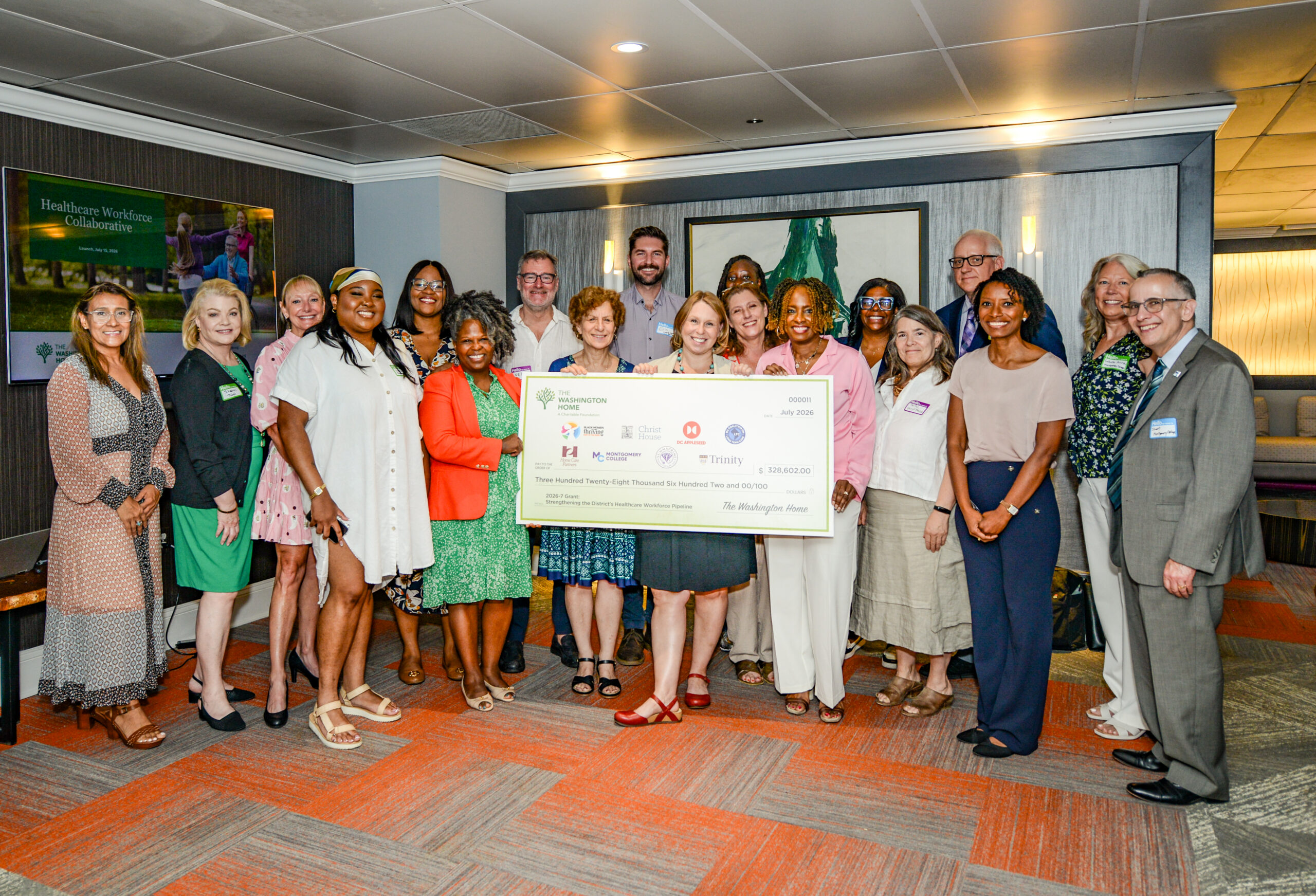
The District simply cannot solve its healthcare workforce crisis one disconnected project at a time.
That is why I am especially excited about our new initiative, made possible through the generous support of The Washington Home. While the project includes important workforce training and employer partnerships, its greatest contribution may be something less visible—but far more important. It is an attempt to begin building the connective tissue that has been missing from Washington, DC’s healthcare workforce system.
We Don’t Have a Workforce System
People often speak about “the workforce system” as though it already exists.
In reality, what we have is a collection of excellent organizations doing outstanding work, but largely operating independently.
Training providers recruit students. Workforce agencies provide funding. Employers hire when they have openings. Government agencies oversee individual programs. Community organizations help residents overcome barriers to employment.
Each organization plays an important role.
Yet no single entity is responsible for coordinating the entire healthcare workforce pipeline.
No organization is continuously analyzing labor market demand across the long-term care sector. No one is aligning employer hiring needs with training capacity, credentialing, clinical placements, career advancement, and workforce supports. There is no central strategy for helping workers understand the many career opportunities available to them or for ensuring that employers are working together to build a sustainable talent pipeline.
The result is a system that isn’t really a system.
Instead, it is a series of well-intentioned efforts that often leave employers competing for the same limited workforce while potential workers struggle to navigate a confusing landscape of programs, credentials, and career options.
Long-Term Care Requires a Different Approach
Long-term care presents unique workforce challenges.
Unlike many healthcare settings, our workforce spans home care agencies, nursing facilities, assisted living communities, adult day health programs, hospice providers, hospitals, disability services, behavioral health providers, and many others. Workers often move between sectors throughout their careers.
Yet our workforce development efforts rarely reflect that reality.
Training initiatives frequently focus on one occupation, one employer, or one funding stream. Valuable as those programs are, they seldom address the larger question:
How do we build an integrated workforce pipeline that serves the entire long-term care ecosystem?
That is the question this initiative seeks to explore.
Moving Beyond Training
The Washington Home initiative is about much more than training additional healthcare workers.
It is about strengthening relationships across the workforce ecosystem.
It is about creating stronger employer partnerships that move beyond competition toward collaboration.
It is about improving communication between workforce organizations, educators, policymakers, healthcare providers, and community partners.
It is about identifying where workers fall out of the pipeline—and finding ways to remove those barriers before they occur.
Perhaps most importantly, it is about helping residents see healthcare not as a single job, but as a career with multiple pathways for advancement.
Too often, individuals enter healthcare through a Certified Nursing Assistant or Home Health Aide program with little understanding of the opportunities that could follow. With appropriate guidance, many could continue to become medication aides, licensed practical nurses, registered nurses, therapists, supervisors, educators, or healthcare administrators.
But meaningful career navigation remains surprisingly limited.
Many workers receive excellent initial training but little ongoing support in planning their next step. As a result, talented individuals frequently leave the profession—not because they lack ability or commitment, but because they cannot clearly see a pathway forward.
Career navigation should not be an afterthought. It should be a core function of any workforce system.
Building Capacity for the Future
This initiative alone will not solve the District’s workforce challenges.
No single grant can.
But every successful system begins with people willing to think differently.
Our hope is that this work demonstrates the value of ongoing coordination—not simply coordinating one project, but helping coordinate a workforce ecosystem.
The District would benefit tremendously from sustained leadership focused on labor market analysis, employer engagement, career pathway development, policy coordination, data sharing, and strategic planning across the healthcare workforce. Those responsibilities should not depend upon temporary grants or the extraordinary efforts of individual organizations.
A city that depends upon thousands of healthcare workers to care for older adults and people with disabilities deserves an infrastructure that supports those workers with the same intentionality that we expect from any other critical public system.
A Collective Responsibility
The Washington Home project represents an important step in that direction.
It brings together organizations that recognize that no single employer, training provider, nonprofit, or government agency can solve this challenge alone.
Real progress will require sustained collaboration, shared accountability, and a willingness to view workforce development as a system rather than a collection of isolated programs.
The DC Coalition on Long Term Care is proud to help convene that conversation.
As we move forward, our goal is not simply to launch another successful initiative. It is to help lay the foundation for a healthcare workforce system that is coordinated, data-informed, responsive to employer needs, and centered on the workers who make long-term care possible every day.
Our residents deserve nothing less. Our healthcare workers deserve nothing less. And the future of long-term care in the District depends on our willingness to build not just programs, but an enduring system that can meet the needs of generations to come.
A Call to Action
The success of this initiative will not be measured simply by the number of people trained or the number of grants secured. It will be measured by whether we begin creating something that has long been missing in the District: a truly coordinated healthcare workforce system.
That requires all of us.
If you are an employer, we invite you to move beyond filling today’s vacancies and help shape tomorrow’s workforce. Share your workforce needs, serve as an internship or clinical placement site, mentor new workers, and collaborate with other employers to strengthen the entire talent pipeline.
If you are an educator or training provider, help us align curricula with real-world workforce demand and create seamless pathways that allow students to continue advancing throughout their careers.
If you are a government agency or policymaker, join us in building a more coordinated approach to workforce planning. Together, we can improve labor market intelligence, reduce duplication, align public investments, and create policies that support both workers and employers over the long term.
If you represent a community-based organization, advocacy group, or philanthropic partner, help us identify barriers that prevent District residents from entering and advancing in healthcare careers, and work with us to remove them.
And if you are someone considering a career in healthcare, know this: the District needs you. Long-term care offers not just jobs, but meaningful careers that improve lives every day. Our goal is to make those career pathways clearer, more accessible, and better supported than ever before.
The DC Coalition on Long Term Care has always believed that the most complex challenges require collective solutions. No organization can build a healthcare workforce system alone—but together, we can.
The Washington Home initiative is an important beginning, not an ending. It is an opportunity to demonstrate what becomes possible when organizations stop working in parallel and start working as partners in a shared system.
We invite you to join us. Together, we can build a stronger workforce, a stronger long-term care system, and ultimately a healthier District for every resident who depends on care.
Neil Richardson
Coordinator
DC Coalition on Long Term Care
ltccoalition@homecarepartners.org